Leave Your Message
0%

Picking the right Spunbond Nonwoven Machine isn’t just about finding the cheapest deal — it’s actually a pretty big decision that’ll shape your production. You gotta make sure it fits the type of fabric you want to make, how much your market can handle, and the space you’ve got in your plant. Start by figuring out your target basis weight, web width, polymer type, and how much you want to produce each day. These details really impact how the machine forms the web, draws the fibers, bonds everything together, and how the winding and controls work. Missing the mark on these can end up costing you a lot. Also, machines built to do many types of products might need more floor space, more operator training, and more maintenance — which could be a bit overkill if you’re only focusing on a specific product line.

When you’re comparing different spunbond Nonwoven machines, don’t forget to ask for detailed tech specs and performance data on products similar to what you plan to make. Find out how easy or quick it is to switch between different fabric weights, what routine maintenance looks like, and what spare parts you should keep handy. Sure, a supplier might give you an impressive output figure, but it’s worth testing the machine yourself under real conditions, making sure the product quality matches what was promised. Keep an eye on how uniform the fabric is, how well the rolls wind, energy consumption, and whether operators can easily access hot or moving parts.

Here’s a little truth: the fastest speed they quote might not be the steady speed you’ll actually get across all your different materials and specs. Also, check what kind of service, installation help, training, and warranty you’re actually getting. If possible, chat with other users who’ve worked with the same supplier. Their real-world experiences can tell you a lot more than what’s just written on a spec sheet. Bottom line — the best machine for you is one your team can run smoothly, keep maintained without headaches, and use to make products your customers actually want.
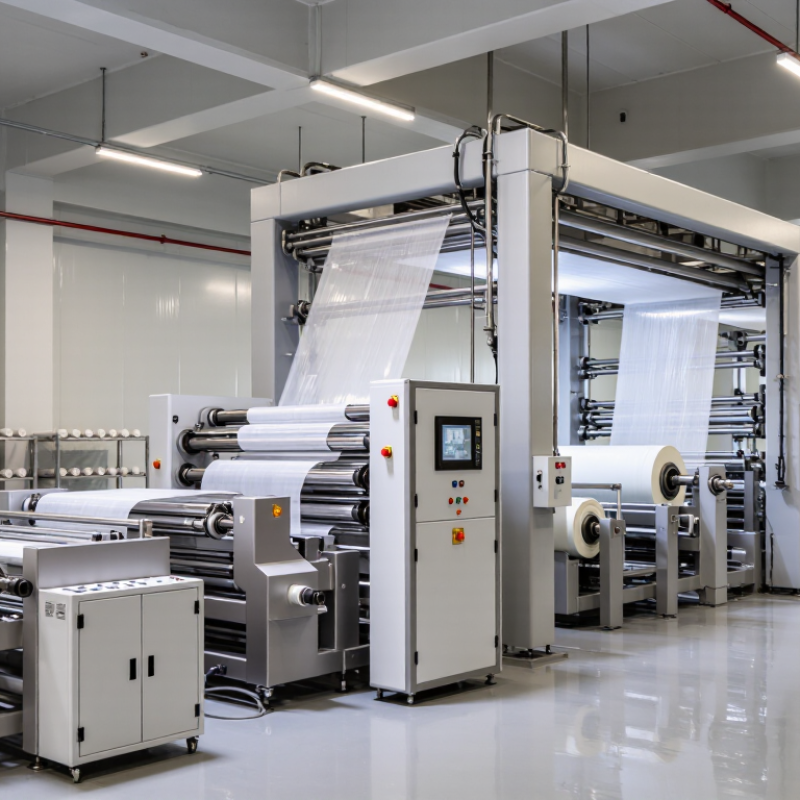
How to Choose the Best Spunbond Nonwoven Machine

Define Your Production Requirements and Target Nonwoven Products

How to Choose the Best Spunbond Nonwoven Machine

Define the product before comparing machine specifications. Will the line make agricultural covers, hygiene components, or durable shopping bags? Each use demands different fabric weight, width, strength, and softness. Record target output in kilograms per hour and acceptable fabric variation. Also note expected shifts, available floor space, and utility limits. These details help determine whether a proposed Spunbond Nonwoven Fabric Machine fits your actual production plan.

Smithers’ report, The Future of Global Nonwovens to 2028, valued the global market at about US$53.6 billion in 2023 and projected growth to US$68.9 billion by 2028. This broad market forecast signals opportunity, but it cannot tell you which line configuration will suit your product.

Request trial samples at your target fabric weight. Check tensile strength, uniformity, roll winding, and changeover time. A line’s maximum capacity may look impressive, yet routine operation at that rate can leave little room for maintenance or product changes. I would recheck the assumptions here: planned output is not always saleable output.

Tips: Start with the end use. Keep it measurable. Bring sample rolls, target specifications, and a realistic shift schedule to supplier discussions; revise them after testing, not just after reading a brochure.

Compare Spunbond Machine Types and Manufacturing Processes

Choosing a Spunbond Nonwoven Fabric Making Machine starts with the web you need, not the headline speed. A single-beam line extrudes polymer through spinnerets, cools and draws continuous filaments, then lays and thermally bonds the web. It can suit lightweight covers, liners, and agricultural fabrics. Check basis weight, usable width, and calender control against your target product.

Multi-beam lines offer different options. A two-beam spunbond line can form a heavier or more uniform web, while an SMS line combines spunbond layers with a fine meltblown barrier layer. That middle layer requires stable airflow and careful filtration. It can improve liquid-barrier performance, but adds process controls and maintenance. More beams do not guarantee better output. That assumption can be expensive.

Compare polymer compatibility, die design, quenching, drawing, web formation, and bonding—not just rated capacity. Ask suppliers for trial data at your intended weight and polymer, then inspect samples for weak edges and uneven bonding. Grand View Research valued the global nonwoven fabrics market at US$54.5 billion in 2023; this broad market figure is context, not a spunbond-machine forecast. Real production conditions vary. Even a well-planned line may need tuning after installation.

Assess Output Capacity, Line Speed, and Equipment Specifications

Choosing a Spunbond Nonwoven Machine starts with the product you need to make, not the largest capacity on a specification sheet. Compare rated output with usable output at your target fabric weight and width. A line may quote high kilograms per hour, yet produce less consistently when making a lighter, wider web. Ask for production data under conditions close to yours. Small details matter.

Line speed is useful only when web quality stays stable. Check speed alongside basis weight, evenness, winding quality, and the time needed for changeovers. A faster line can create more waste if operators struggle to maintain uniform fabric. Watch the web during a trial run. Does it flutter near the forming belt? Are the roll edges neat? Those observations can reveal more than a headline figure, though one short trial is not enough.

Review specifications for working width, fabric-weight range, polymer compatibility, power demand, and control-system functions. Also confirm which components are included, such as the winder and online inspection tools. If your plan involves a Spunbond Meltblown Nonwoven Machine, verify that its process configuration matches the intended fabric structure; similar names do not guarantee similar capabilities. Leave room for maintenance access and future product changes. I would revisit any decision based on maximum speed alone.

How to Choose the Best Spunbond Nonwoven Machine - Assess Output Capacity, Line Speed, and Equipment Specifications

Machine Configuration Nominal Web Width Typical Line Speed Illustrative Output at 15 gsm Common Product Range Key Equipment Checks
Compact single-beam line About 1.6 m 150–250 m/min About 4.1–6.9 t/day Lightweight hygiene, medical, and general-purpose webs Available floor space, basic web monitoring, winding width, and ease of changeover
Mid-width single- or multi-beam line About 2.4 m 200–350 m/min About 8.3–14.5 t/day General hygiene, medical, and filtration substrates Beam configuration, basis-weight control, draw stability, and downstream capacity
Wide multi-beam line About 3.2 m 250–450 m/min About 13.8–24.9 t/day Higher-volume hygiene, medical, and industrial applications Uniformity across the full width, polymer feed consistency, energy demand, and winding automation
Extra-wide multi-beam line About 4.2 m 250–450 m/min About 18.1–32.7 t/day Large-scale production of hygiene, medical, and industrial webs Building and utility requirements, edge-to-edge quality, maintenance access, and roll-handling capacity

Output figures are illustrative planning estimates, not guaranteed machine ratings. They assume a 15 gsm web, 24-hour operation, and 80% operating efficiency; actual output varies with material, basis weight, product quality requirements, downtime, and line design. A simplified estimate is: output (t/day) = web width (m) × line speed (m/min) × basis weight (g/m²) × 1,440 ÷ 1,000,000 × operating efficiency.

Check Compatibility With Fabrics, Polymers, and Product Thicknesses

Match the machine to the fabric’s intended use, not just its advertised output. A Pp Spunbond Nonwoven Machine is designed for polypropylene, but other polymers may need different melt handling, temperatures, and process settings. Confirm the materials you plan to run before comparing equipment. Small differences matter.

Check whether the line can produce your target fabric weights and thicknesses consistently. Basis weight, measured in grams per square metre, is not the same as thickness; compression and fibre bonding affect the finished sheet. Ask for trial data using your polymer and a sample close to your target specification. Look for even web formation, stable roll edges, and repeatable measurements across the roll. A catalog range is only a starting point, not proof that every setting will work well in production. Ask for evidence. Review the machine’s operating window, changeover requirements, and quality checks with a process specialist. If the supplier cannot explain how fabric type and thickness affect setup, pause before committing. A practical test can reveal limits that a specification sheet leaves unclear.

Evaluate Automation, Quality Control, Energy Use, and Maintenance

How to Choose the Best Spunbond Nonwoven Machine

A machine should match your product range, not just its advertised output. Check whether its working width and speed suit your target fabric weight and daily production plan. Ask how operators adjust polymer flow, web formation, and bonding temperature. Small changes can affect fabric strength and consistency. More automation is not always better. Look for clear controls, useful alarms, and repeatable settings that your team can verify.

Quality control needs to be built into the line. Confirm how the system monitors basis weight, web tension, and temperature across the fabric width. A sample roll may look even while measurements reveal thin spots near the edges. Ask what inspection data operators can review and how quickly they can respond to a drift. The display can be impressive; the records matter more. Also check whether the machine can hold stable quality during speed changes.

Compare energy use under realistic operating conditions, including startup and normal production. Request figures per kilogram of fabric, then consider your expected shift pattern. Maintenance deserves equal attention. Check access to filters, rollers, and bonding components, and ask how routine cleaning affects downtime. Spare parts storage takes space. It can still prevent long waits. A detailed service plan helps, though operators may discover awkward access points only after installation. That possibility deserves a candid discussion before purchase.

How to Choose the Best Spunbond Nonwoven Machine

Compare automation, quality control, energy use, and maintenance when evaluating equipment.

Example buyer-priority weighting: quality control 30%, automation 25%, energy use 25%, and maintenance 20%. These are suggested decision weights, not industry benchmark measurements. Adjust them to match your production goals, operating costs, and service requirements.

Review Supplier Support, Machine Reliability, and Total Ownership Cost

How to Choose the Best Spunbond Nonwoven Machine

Review Supplier Support, Machine Reliability, and Total Ownership Cost

A capable supplier should explain installation, operator training, troubleshooting, and spare-parts availability in clear terms. Ask who handles service calls and what response time is realistic. Request a written list of recommended spare parts, with prices and typical delivery times. If possible, speak with a plant using similar materials and production speeds. A polished demonstration is useful, but it cannot show every operating condition. Small details matter.

Assess reliability through a production trial, not just a brochure. Check basis-weight consistency across the web, startup waste, alarm history, and how quickly operators can clear common faults. Ask about maintenance intervals and inspect access to filters, rollers, and electrical components. Then compare total ownership costs: purchase price, energy per kilogram, labor, consumables, installation, training, and downtime. A lower quote may hide costly exclusions. Estimates are imperfect, so state your assumptions and revisit them before signing.

High-Output PP Spunbond Lines: Insights from Smithers’ *The Future of Global Nonwovens to 2028*

High-output PP spunbond lines are drawing attention as nonwoven producers look to meet demand with greater production capacity and consistent fabric quality. Industry outlooks through 2028 point to the importance of efficient, adaptable manufacturing as applications continue to expand across hygiene, medical, packaging, and other markets. For line operators, high output is only one part of the equation: reliable process control, suitable web structures, and the ability to respond to changing product requirements also matter.

Manufacturers planning new capacity can consider equipment configurations such as S, SS, SSS, SMS, SMMS, and SSMMS lines, each designed to support different fabric properties and end uses. A Chinese machinery manufacturer specializing in PP, PET, and PLA spunbond and meltblown nonwoven production equipment can provide options ranging from individual lines to turnkey projects. Evaluating production goals, material needs, factory layout, and technical support before choosing a system can help businesses select a line that aligns with both current demand and future plans.

FAQS

How should I match a machine to my fabric?

Start with the polymer and intended use. Different materials may need different melt handling, temperatures, and settings. Check before comparing machines.

Are basis weight and fabric thickness the same?

No. Basis weight is measured in grams per square metre. Compression and fibre bonding also affect thickness. The distinction can be easy to overlook.

What should a production trial measure?

Use your polymer and a sample close to your target. Check web uniformity, roll edges, and repeatable measurements across the roll. Real production can still differ.

Can a catalog range prove the machine will meet my needs?

Not by itself. Ask for trial data and the operating window for your fabric. A specification sheet leaves some questions unanswered.

What supplier support should I confirm?

Ask about installation, operator training, troubleshooting, and spare-parts availability. Get response times, part prices, and delivery estimates in writing.

How can I assess machine reliability?

Review a production trial. Check basis-weight consistency, startup waste, alarm history, and how quickly operators clear common faults. A polished demonstration is limited.

Which costs belong in the ownership estimate?

Include purchase price, energy per kilogram, labor, consumables, installation, training, and downtime. Compare energy use under the same conditions.

What should I check before signing an agreement?

Document output targets, service terms, and warranty exclusions. Keep a contingency for wear parts. Estimates are imperfect, so revisit your assumptions.

Conclusion

Choosing the best spunbond nonwoven machine starts with a clear understanding of your production goals, target products, and expected demand. Compare available machine types and manufacturing processes, then assess output capacity, line speed, and technical specifications to ensure the equipment can meet your required production volumes. Confirm that it can handle the polymers, fabric properties, and product thicknesses relevant to your applications.

Consider the complete operating picture, not just production speed. Automation and quality-control features can support consistent output, while energy efficiency and ease of maintenance affect day-to-day costs. Finally, review supplier support, equipment reliability, and total ownership cost, including installation, operation, and upkeep. A balanced evaluation helps you select a machine that fits your requirements, supports dependable production, and remains practical as your business needs evolve.
Clara

Clara

Clara is a dedicated marketing professional at Pujiang Marine Engineering Import & Export Co., Ltd., where she utilizes her extensive knowledge of the company's products and services to effectively engage with clients and stakeholders. With a keen eye for detail and a passion for communication,......
Previous How to Choose Spunbond Non Woven Fabric in 2026?