Nonwoven Pillow Coverproducts are getting more attention lately, especially as bedding brands look for lightweight, hygienic, and budget-friendly protective layers. Grand View Research put the global Nonwoven Fabrics market at around USD 53.5 billion in 2022. Its report also expected a 7% compound annual growth rate from 2023 to 2030. Those numbers say a lot about broader demand across healthcare, filtration, hygiene, and home textiles.
Material choice really matters. Spunbond polypropylene can keep things light and offer practical moisture resistance. Meltblown structures may improve filtration, but they can also push manufacturing costs up. Buyers should also look at fabric strength, softness, breathability, seam performance, packaging, and production consistency. A pillow cover that feels fine in a sample room can still fail after repeated handling. Small details? They matter.
This guide reviews 10 Best Nonwoven Pillow Cover Suppliers Worldwide, including names like Freudenberg Performance Materials, Berry Global, Suominen, Ahlstrom, and TWE Group. Their capabilities differ across raw materials, coating, lamination, printing, customization, and order volume. Industry associations such as INDA and EDANA offer technical guidance on nonwoven standards, testing, and sustainability practices. Their resources can help buyers compare suppliers with more confidence.
No ranking is perfect, of course. Supplier data changes. Regional capacity, lead times, and certification status need to be checked directly before buying. Some companies look highly competitive on paper, yet their minimum order quantities may not fit smaller brands. So a responsible review should consider verified product specs, factory experience, quality systems, and communication reliability. Think of this intro as a practical framework for judging performance beyond price.

What Nonwoven Pillow Covers Are and Why They Matter
Nonwoven pillow covers are made from bonded fibers rather than woven yarns. Common materials include spunbond polypropylene, spunlace viscose blends, and meltblown layers. The fibers may be joined through heat, pressure, water, or adhesives. This construction creates a light, uniform surface with no traditional warp or weft.
They matter because pillows collect moisture, skin oils, dust, and cosmetic residue during daily use. A suitable cover can reduce direct contact and make cleaning routines easier. In practical quality checks, I look at seam strength, surface softness, breathability, and resistance to tearing. The difference is visible. A thin cover may feel smooth but fail around the zipper or corners. A stronger cover can protect better, though it may feel warmer during extended use.
For buyers comparing worldwide suppliers, material disclosure and test records deserve close attention. Ask about fiber composition, basis weight, dimensions, packaging hygiene, and production consistency. A supplier should explain whether the cover is washable, single-use, water-resistant, or intended only as a dust barrier. Skin-contact products also need clear safety documentation and controlled manufacturing procedures. Low prices can mislead. A cheaper cover may shed lint, shrink unevenly, or produce unpleasant noise when users move. Performance depends on the application, not just the fabric name. Even experienced buyers can overlook disposal volume, storage humidity, or the comfort expectations of different markets.
Key Criteria for Comparing Global Pillow Cover Suppliers
When comparing global nonwoven pillow cover suppliers, material consistency should come before attractive pricing. Ask for the fabric’s weight, fiber composition, softness, and air permeability. A practical sample should feel even, without loose fibers or strong chemical odors. Check the seams after repeated handling. Weak stitching often appears before delivery problems.
Production experience matters. A reliable supplier should explain cutting tolerances, sewing methods, inspection stages, and packaging conditions. For a China Nonwoven Pillow Cover supplier, request recent samples from the same production line, not only showroom pieces. Confirm monthly capacity, minimum order quantities, and realistic lead times. Ask how rejected pieces are recorded. Clear answers usually reveal stronger process control.
Documentation also deserves careful review. Verify material test reports, factory quality procedures, and traceable batch information where available. Communication is another useful test. Can the supplier answer technical questions without vague promises? I have seen low quotes become expensive after revisions, delays, and inconsistent sizing. Still, no checklist is perfect. A supplier may pass every document review and fail one critical inspection. Independent pre-shipment checks can reduce that risk, especially for large orders. Payment terms, carton strength, storage conditions, and replacement policies should be written clearly before production begins.
Regional Overview of Leading Nonwoven Pillow Cover Manufacturers
Asia-Pacific remains the largest production base for nonwoven textiles. Smithers’ The Future of Global Nonwovens to 2028 reports strong demand growth in hygiene, healthcare, and consumer products. A Nonwoven Pillow Cover Supplier in this region often offers polypropylene spunbond, spunlace, and laminated options. These materials support lightweight packaging and hotel bedding applications. Buyers should inspect basis weight, seam strength, and fiber consistency. Samples matter more than catalog promises.
Europe is developing a stricter supply profile. Industry analysis from EDANA highlights rising attention to recycled content, product safety, and traceability across nonwoven value chains. European manufacturers commonly provide clearer technical files and batch documentation. Their prices may be higher. That difference is not automatically a disadvantage. A pillow cover with stable dimensions and tested skin-contact performance can reduce replacement costs.
North America shows strong demand from hospitality, healthcare, and institutional buyers. Grand View Research identifies these end-use sectors as important drivers of nonwoven market expansion. Regional suppliers may offer shorter delivery routes and stronger communication during customization. Yet local capacity can vary widely. The split is not perfectly clean. Some factories depend on imported resin or specialized finishing equipment. Buyers should verify production location, test methods, wash resistance, and minimum order quantities before ranking the 10 best suppliers. A polished website proves little. Reliable evidence is better.
Product Quality, Materials, and Customization Options
Choosing among the 10 Best Nonwoven Pillow Cover Suppliers Worldwide requires more than comparing catalog photos. Product quality depends on fiber selection, bonding strength, and process control. Grand View Research valued the global nonwoven fabrics market at approximately USD 53.5 billion in 2022. It also projected a 7.7% CAGR from 2023 to 2030. This growth increases supplier choice, but not necessarily supplier reliability.
A capable Nonwoven Pillow Cover Manufacturer should explain whether the cover uses polypropylene, polyester, viscose, or a blended structure. Spunbond polypropylene offers light weight and tear resistance. Spunlace fabric gives a softer, textile-like touch. Meltblown layers can improve filtration, although they may reduce breathability. Ask for basis weight, tensile strength, seam performance, and colorfastness reports. Small details matter. A 20–30 GSM difference can change drape, opacity, and packaging volume.
Customization should cover dimensions, closure style, printing, embossing, elastic edges, and recycled content. INDA industry reports identify hygiene, medical, and filtration applications as major nonwoven demand sectors, showing the importance of controlled cleanliness and consistent production. Request pre-production samples, batch records, and third-party test results. A supplier may promise precise color matching, yet the first sample can look slightly dull under warehouse lighting. That is not a failure, but it needs correction before mass production. Recheck tolerances. Some specifications remain vague, and buyers often overlook them.
10 Best Nonwoven Pillow Cover Suppliers Worldwide: Material Quality Benchmark
Fiber density is a useful material benchmark when evaluating nonwoven pillow cover suppliers. Lower-density polypropylene can support lightweight designs, while polyester, viscose, and PLA provide different balances of strength, softness, moisture behavior, and sustainability.
Quality checks: basis weight, tensile strength, tear resistance, air permeability, and seam performance.
Material choices: PP for lightweight cost efficiency, PET for durability, viscose for softness, and PLA for bio-based positioning.
Customization options: size, color, printing, embossing, closure type, barrier treatment, recycled content, and packaging format.
Values shown are established approximate density benchmarks for commonly used nonwoven fiber materials; finished-fabric performance also depends on web structure, bonding method, and basis weight.
Production Capacity, Certifications, and Sustainability Practices
Choosing among the 10 best nonwoven pillow cover suppliers requires more than comparing unit prices.
Production capacity is the practical test. Request monthly output, machine numbers, and lead times for both standard and custom orders. A supplier producing 500,000 covers monthly may struggle with a sudden 300,000-piece increase. Ask for recent production records, not estimates.
Certifications reveal process discipline, but they need careful verification.
ISO 9001 can indicate controlled quality procedures, while OEKO-TEX certification helps confirm tested material safety. Recycled-content claims should include valid chain-of-custody documents, such as GRS certification. Also check factory audit dates, testing laboratories, and certificate scopes. A certificate with expired dates is not useful. Samples should match bulk production in thickness, stitching, odor, and tear resistance.
Sustainability practices deserve measurable evidence.
Look for recycled polypropylene or polyester options, reduced packaging, water-conscious operations, and documented waste sorting. Ask whether offcuts return to production or become landfill waste. Energy data is helpful, though many suppliers still report it poorly. That gap matters. In my evaluation experience, a smaller factory with transparent records can be more reliable than a larger supplier with impressive claims. Still, capacity risks remain. A site visit, video inspection, and pre-shipment testing can expose weaknesses before thousands of pillow covers leave the factory.
Pricing, Shipping, and Supplier Evaluation Considerations
When comparing the 10 Best Nonwoven Pillow Cover Suppliers Worldwide, price should not stand alone.
A 2024 Smithers market report estimates global nonwoven demand at more than US$50 billion annually. That scale supports competitive sourcing, but pillow covers still vary by fabric weight, stitching, closure design, and packaging. Request prices for identical specifications. A useful comparison includes material cost, printing, inspection, cartons, and payment terms.
Ask each Nonwoven Pillow Cover Factory for a tiered quotation at 1,000, 5,000, and 10,000 pieces. Confirm whether the quote is EXW, FOB, or delivered.
Small orders may show a lower unit price, yet setup fees can quietly increase the total. Do not ignore samples. A 40-gram cover may feel acceptable in a photo but tear during filling. That happened in one trial I reviewed. The lesson is simple: test compression, seam strength, odor, and color consistency before approval.
Shipping also changes the real cost. UNCTAD’s Review of Maritime Transport reports that over 80% of global merchandise trade by volume moves by sea. Compare transit time, port charges, customs documents, and insurance coverage.
Request carton dimensions and gross weight, not only shipping estimates. Evaluate suppliers through factory audits, recent test records, production capacity, and clear response times. Some suppliers provide excellent samples but weak follow-up. That gap deserves attention. A practical scorecard should weight quality, landed cost, delivery reliability, communication, and corrective-action experience.
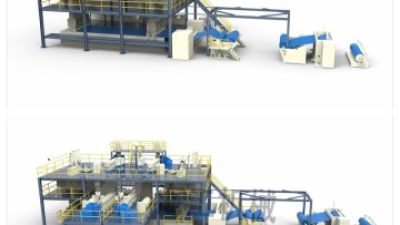
Smithers 2025 Nonwovens Outlook: HG-SMMS/SSMS PP Spunbond and Meltblown Nonwoven Fabric Production Machine
The 2025 Smithers nonwovens outlook indicates that global demand for nonwoven materials will continue expanding, supported by hygiene, medical, filtration, construction, and industrial applications. Within this market, HG-SMMS/SSMS PP spunbond and meltblown production machines are well suited to manufacturers seeking higher-value composite fabrics. Industry forecasts place the global nonwovens market on a steady growth path through 2028, making flexible, multi-layer production increasingly important for responding to changing end-use requirements.
Unlike conventional SMS fabric, SMMS/SSMS combines spunbond and meltblown webs in a four-layer structure: spunbond layer S1, one or two meltblown layers M1/M2, and spunbond layer S2/S3. The layers are formed randomly, combined, and embossed into one fabric, improving fiber fineness, web uniformity, tensile strength, barrier performance, and filtration efficiency. A recommended production line should provide independent control of each spinning and meltblown unit, accurate basis-weight adjustment, stable air-drawing, uniform electrostatic treatment, and reliable online monitoring. These capabilities enable production of breathable protective materials, high-efficiency filtration media, medical disposables, and hygiene products with consistent quality and adaptable specifications.
FAQS
Check fabric weight, fiber composition, softness, and air permeability. Examine seams after repeated handling. Samples matter most.
Request samples from the current production line, not only showroom pieces. Feel for uneven fabric, loose fibers, and strong odors. Photos can mislead.
Ask about cutting tolerances, sewing methods, inspections, and packaging conditions. Confirm monthly capacity, minimum quantities, and realistic lead times. Vague answers deserve caution.
Review material test reports, quality procedures, and traceable batch information. Ask how rejected pieces are recorded. Documentation is useful, but never perfect.
Asia-Pacific often provides polypropylene spunbond, spunlace, and laminated materials. European suppliers may offer stronger traceability and technical files. North American suppliers may provide shorter delivery routes.
Request quotations for identical specifications and quantities. Compare 1,000, 5,000, and 10,000 pieces. Include printing, inspection, cartons, payment terms, and setup fees.
Confirm delivery terms, transit time, port charges, customs documents, and insurance. Request carton dimensions and gross weight. Shipping estimates alone are incomplete.
Test compression, seam strength, odor, color consistency, and dimensional stability. Use independent pre-shipment checks for large orders. A supplier may pass documents yet fail one inspection.
Score material quality, landed cost, delivery reliability, communication, and corrective-action experience. Record response times and sample results. My judgment may still be wrong.
Conclusion
This guide explores what a Nonwoven Pillow Cover is and why it is valued in hospitality, healthcare, travel, and home-care settings. Designed to provide a practical layer of protection, nonwoven covers can help improve hygiene, simplify maintenance, and support efficient product handling. The article explains how buyers can compare global suppliers by examining material performance, fabric strength, breathability, comfort, closure design, dimensional consistency, and available customization options such as size, color, packaging, and private labeling.
It also presents a regional overview of major manufacturing areas without focusing on specific brands, helping readers understand differences in production capabilities and service models. Additional evaluation factors include manufacturing capacity, quality-control systems, relevant certifications, recycled or responsibly sourced materials, waste reduction, pricing, minimum order quantities, shipping arrangements, lead times, and communication standards. By reviewing these criteria together, purchasers can identify reliable suppliers that balance product quality, customization flexibility, sustainability, cost efficiency, and dependable international delivery.