Leave Your Message
Choosing the best Sss Nonwoven Machine for 2026 isn’t just about crunching numbers or looking at output stats. Honestly, in the real world, buyers need equipment that fits their specific goals, factory space, available labor skills, and local support. What works like a charm in one plant might totally flop in another, so you really gotta pay attention to that.
This guide dives into practical things to consider when buying SSS Spunbond lines. We talk about web uniformity, basis-weight control, energy consumption, line speed, raw material compatibility, and how easy it is to switch setups. Plus, we look at installation support, operator training, spare parts availability, and whether the testing process is well-documented. Trustworthy suppliers should be upfront with clear specs, references from their factories, and transparent warranty info. It’s also smart to get independent inspections and sample run tests—they often reveal issues that glossy brochures don’t mention.
Don’t overlook the little stuff either—things like a stable temperature system can keep your fabric consistent during those long shifts. Easy-to-reach filters save time on cleaning, and a well-designed control panel can help new operators avoid costly mistakes. But hey, no single Sss Nonwoven Machine is perfect for everyone. Price is important, but it doesn’t tell the whole story—things like maintenance delays, shipping issues, or communication troubles can really throw a wrench in things.
We focus on real evidence, not just shiny marketing claims. Make sure to check details against supplier info, try out the machines if possible, look for certifications, and plan your production realistically. While big names like Reifenhäuser, Oerlikon Neumag, and DiloSystems are worth considering, don’t forget regional suppliers who might be a great fit. The goal isn’t always to pick the fastest or cheapest line—it’s about finding the system that consistently delivers quality, manageable costs, and good support over the long haul. And of course, performance should be confirmed before making a final decision.
2026 Best SSS Nonwoven Machine for Global Buyers
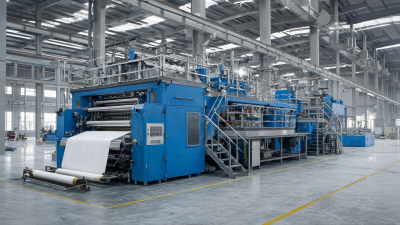
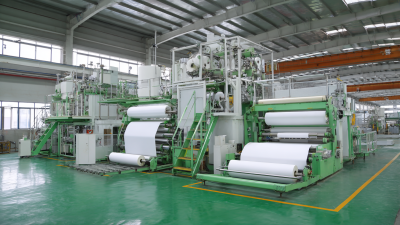
An SSS nonwoven machine produces spunbond fabric through three separate spinning layers. It melts polymer resin, extrudes fine filaments, and forms a continuous web. The three-layer structure improves fabric uniformity, strength, and coverage. Common materials include polypropylene and other approved thermoplastic polymers.
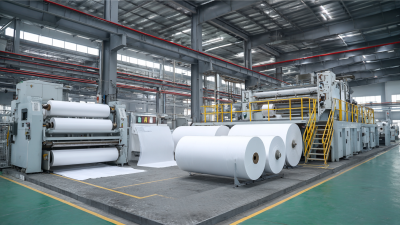
The production line contains an extrusion system, filter, metering pump, spinning beams, quench chamber, and drawing unit. Airflow stretches the filaments before a forming system places them on a moving belt. A heated calender then bonds the web with controlled pressure and temperature. Finally, the winding unit creates stable rolls for packaging or further processing.
In practical factory work, each section affects the next one. Uneven air pressure can create visible streaks across the fabric. Poor temperature control may cause weak bonding or unstable thickness. Small errors matter. A China Sss Nonwoven Machine should therefore be assessed through trial data, output consistency, energy use, and maintenance access. Buyers should check fabric weight ranges, line speed, changeover time, and operator controls. High speed is not always better. Some materials require slower settings and longer testing. This part is easy to underestimate. Reliable suppliers should provide technical documents, installation guidance, safety systems, and measurable performance records rather than broad claims.
| Data Dimension | Typical SSS Nonwoven Machine Data | Definition, Function, or Selection Guidance |
|---|---|---|
| Machine Definition | A three-beam spunbond production line that forms, lays, bonds, and winds continuous thermoplastic filaments into nonwoven fabric. | SSS means three spunbond layers produced in sequence. The configuration is suitable for buyers requiring stable output, high productivity, and consistent fabric structure. |
| Meaning of “SSS” | S = Spunbond layer; SSS = three spunbond layers combined into one fabric web. | Compared with a single-beam line, three beams can improve fabric uniformity, tensile balance, bulk, and production flexibility when process parameters are correctly controlled. |
| Main Raw Materials | Polypropylene (PP) is the most common material. Polyester (PET) and selected bicomponent or recycled polymer options may be used when supported by the line design. | PP is widely selected for hygiene, medical, packaging, agriculture, and general industrial applications because of its low density, chemical resistance, and processability. |
| Production Process | Polymer feeding → melting and filtration → spinning → filament stretching → web laying → three-layer web formation → thermal bonding → edge trimming → winding. | Each stage affects fabric strength, appearance, basis-weight uniformity, defect rate, and energy consumption. A complete line should include coordinated control across all stages. |
| Extrusion System | Typically includes material feeding, gravimetric or volumetric dosing, one or more extruders, melt filtration, melt pumps, and heated polymer pipelines. | Accurate dosing and stable melt pressure help maintain consistent filament diameter and basis weight. Continuous filtration reduces contamination-related defects. |
| Spinning System | Each of the three spunbond beams generally contains a spinneret, spinning pack, quench-air system, and filament-stretching section. | Uniform cooling and controlled air stretching are essential for stable filament formation, tensile performance, softness, and web appearance. |
| Web-Forming System | Filaments are distributed across the working width by an air-drawing and web-laying system before entering the bonding unit. | The web-forming system should provide even cross-machine distribution and adjustable layering to reduce basis-weight variation and improve product consistency. |
| Bonding Method | Thermal calender bonding is commonly used, with an embossed roll and a smooth or patterned roll operating under controlled temperature, pressure, and line speed. | Bonding conditions determine fabric strength, elongation, hand feel, air permeability, surface appearance, and dimensional stability. |
| Typical Working Width | Approximately 1.6–3.2 m for many commercial configurations; wider or narrower systems are also available for specialized applications. | Select the width according to target products, converting equipment, shipping requirements, factory space, and expected production volume. |
| Typical Basis-Weight Range | Approximately 10–150 g/m² for many PP spunbond applications, depending on raw material, line design, speed, and product specification. | Lightweight grades are common in hygiene and packaging products, while heavier grades are used in agriculture, construction, furniture, and industrial materials. |
| Typical Operating Speed | Approximately 300–600 m/min for many modern production lines; the practical speed depends on basis weight, polymer, width, bonding pattern, and product quality targets. | Maximum mechanical speed should not be evaluated alone. Stable output, low waste, consistent quality, and achievable production speed are more important for total operating value. |
| Fabric Structure | A continuous filament web with three spunbond layers thermally bonded into a single nonwoven fabric. | The multilayer structure can support better tensile balance and more flexible product design than a single-layer arrangement, subject to process control and bonding conditions. |
| Core Function: Filament Formation | Converts molten polymer into continuous filaments through spinnerets and controlled cooling and stretching. | Stable filament formation supports uniform fabric appearance, predictable mechanical properties, and reliable downstream processing. |
| Core Function: Layer Formation | Combines the webs from three spunbond beams into a controlled multilayer web. | Independent beam adjustment can help buyers produce different basis weights, layer balances, and fabric performance profiles within the line’s design limits. |
| Core Function: Thermal Bonding | Uses heat and pressure to bond filament intersections without weaving or knitting yarns. | Thermal bonding provides high production efficiency and allows the fabric to retain a lightweight, breathable, and flexible structure. |
| Core Function: Edge Trimming | Removes irregular web edges and maintains the required finished width before winding. | Effective trimming improves roll quality, reduces edge defects, and helps downstream users achieve more stable converting performance. |
| Core Function: Winding | Forms the finished nonwoven fabric into rolls with controlled tension, alignment, diameter, and roll hardness. | A reliable winding system reduces telescoping, wrinkles, loose edges, and roll deformation during storage and transportation. |
| Automation and Control | Common functions include recipe management, temperature control, pressure monitoring, speed synchronization, alarm records, and production data tracking. | Higher automation can reduce manual adjustment, improve repeatability, support faster troubleshooting, and help monitor energy and material consumption. |
| Quality-Control Indicators | Basis-weight uniformity, tensile strength, elongation, tear strength, air permeability, thickness, roll appearance, and bonding strength. | Buyers should define measurable acceptance criteria before ordering and verify them through laboratory testing and production trial samples. |
| Common Applications | Hygiene products, medical and protective products, agricultural covers, furniture and mattress materials, construction membranes, packaging, filtration support, and industrial laminates. | The appropriate machine configuration depends on the required softness, strength, permeability, barrier performance, basis weight, color, and finishing process. |
| Optional Finishing Compatibility | The produced fabric may be suitable for downstream processes such as lamination, printing, coating, hydrophilic treatment, hydrophobic treatment, antistatic treatment, and slitting. | Confirm compatibility between the SSS line, surface treatment equipment, adhesive or coating system, and final product requirements before investment. |
| Energy Considerations | Major energy users generally include extruders, heaters, spinning systems, air compressors, suction fans, calender heating, and winding equipment. | Energy performance is influenced by polymer type, line speed, basis weight, insulation, motor efficiency, air-system design, and operating discipline. |
| Factory Requirements | A suitable production hall, stable electrical supply, ventilation, cooling water or chiller capacity, compressed air, polymer storage, finished-roll storage, and safety clearances are required. | Global buyers should confirm local utility standards, building height, floor loading, environmental requirements, fire protection, and equipment access before installation. |
| Safety Features to Verify | Emergency stops, guarding, interlocks, over-temperature protection, pressure relief, electrical protection, safe access platforms, and lockout procedures. | Safety design should be reviewed against applicable local regulations and recognized machinery-safety practices before commissioning and operator training. |
| Maintenance Priorities | Regular inspection of spinnerets, spinning packs, filters, heaters, pumps, air ducts, calender rolls, bearings, sensors, cutters, and winding components. | Preventive maintenance helps control defects, unplanned downtime, polymer leakage, uneven bonding, roll-quality problems, and premature component wear. |
| Best-Buying Criteria for 2026 | Verified output at the target basis weight, stable quality, controllable energy use, automation level, spare-parts availability, operator training, safety compliance, and lifecycle support. | The best SSS nonwoven machine is the one that matches the buyer’s product portfolio, local utilities, production scale, quality targets, budget, and long-term operating capability. |
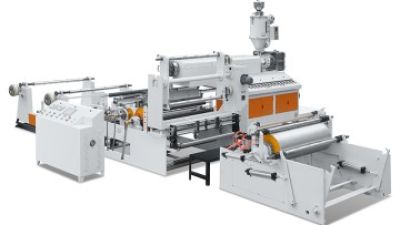
Choosing a high-performance nonwoven lamination machine starts with matching its design to your fabric, coating method, and production targets. According to the INDA/EDANA *World of Nonwovens* report, global nonwoven production reached approximately 13.8 million metric tons in 2022 and is projected to grow significantly through 2027. This expansion increases the need for equipment that can maintain stable bonding quality at higher output levels. Evaluate the machine’s working width, line speed, substrate compatibility, and ability to process heat-sensitive materials before making a purchase.
A reliable system should provide precise control of temperature, nip pressure, web tension, and adhesive or coating weight. Multi-zone heating, automatic tension adjustment, and uniform pressure distribution help prevent wrinkles, delamination, and uneven waterproofing. For medical textiles, protective clothing, and packaging fabrics, consistent quality is more important than maximum speed alone. The machine should also support rapid changeovers and recipe storage so operators can switch between materials with minimal waste.
Energy efficiency and uptime are equally important selection criteria. The European Commission’s *Best Available Techniques Reference Document for Textiles* emphasizes process control and energy management as key factors in reducing manufacturing costs and environmental impact. Look for insulated heating units, efficient drive systems, accessible maintenance points, and real-time monitoring of critical parameters. A robust nonwoven lamination machine should combine dependable mechanical construction with responsive controls, helping manufacturers achieve stronger, more durable laminated fabrics while reducing downtime and production variability.
: Practical lines often range from 1.6 to 3.2 meters wide. Match the width to your products and factory space. Wider is not automatically better.
Review production from roughly 10 to 150 grams per square meter. The actual range depends on fiber type and machine design. Request test rolls at your target weight. Measure uniformity across the entire web.
Confirm continuous speed, startup speed, and speed at your real basis weight. An empty-machine figure can mislead. Usable output matters more.
Check energy consumption, heating control, and automatic tension adjustment. Ask for energy records from similar production conditions. Small savings can accumulate daily.
Review the PLC interface, alarm records, emergency stops, and access protection. Ask to test emergency-stop response during acceptance. Do not rely on screenshots.
Request sample rolls, maintenance schedules, spare-parts lists, and training details. Samples should match your planned fiber blend and basis weight. Brochures are not enough.
Measure noise, dust, floor loading, compressed-air demand, and available floor space. Prepare a floor plan and utility checklist. Also inspect lifting points.
Examine cleaning access around the spinnerets and carding section. Look for reachable sensors and removable covers. A polished demonstration can hide maintenance problems. That possibility deserves honest consideration.
Request risk assessments, electrical schematics, manuals, and destination-market conformity documents. Acceptance tests should measure basis weight, width tolerance, temperature stability, and emergency-stop response. Keep written evidence.
Confirm response times, remote diagnostics, technician availability, training hours, and local-language support. Include preventive-maintenance intervals and critical sensor codes. One missing component can stop production for weeks. That risk is easy to underestimate.
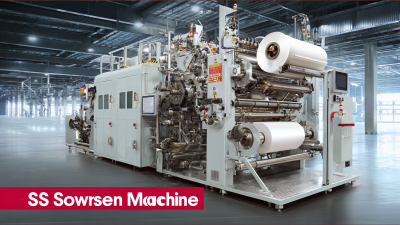
The Sss Nonwoven Machine is a specialized production system designed to manufacture strong, uniform spunbond fabrics through polymer melting, fiber extrusion, web formation, and thermal bonding. Its main structure typically includes an extrusion unit, spinning system, cooling section, web-forming equipment, bonding rollers, winding system, and control cabinet. When selecting a 2026 model, buyers should evaluate working width, production speed, polymer compatibility, fabric weight range, output capacity, and finished-product consistency.
Modern Sss Nonwoven Machine solutions support materials such as polypropylene and other suitable thermoplastic polymers for applications including hygiene products, medical supplies, agriculture, packaging, construction, and filtration. Advanced automation, real-time monitoring, energy-saving heating systems, precise temperature control, and online quality inspection can improve efficiency and reduce waste. Global buyers should also review safety compliance, electrical standards, installation requirements, operator training, spare-parts availability, remote assistance, maintenance services, and warranty terms to ensure reliable long-term operation.