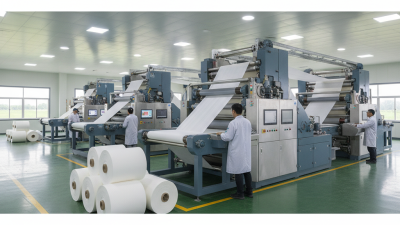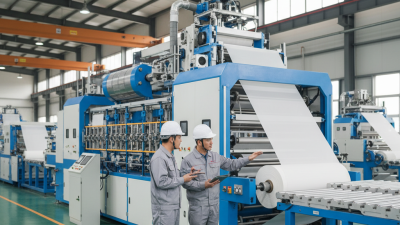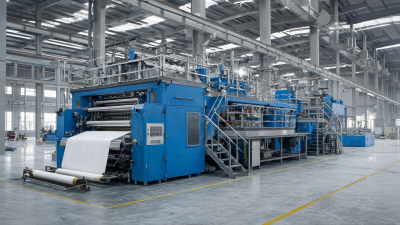
Global buyers are stepping into a tougher, more demanding Nonwoven equipment market. According to Smithers’ “The Future of Global Nonwovens to 2029,” growth keeps coming in hygiene, medical, filtration, construction, and automotive applications. Grand View Research points to the same trend: demand for spunbond fabrics is expanding, especially where lightweight strength and consistent production really matter.
That’s where a Spun Bond Nonwoven Machine is worth a closer look. A modern line takes polypropylene resin, turns it into continuous filaments, lays them out evenly, and bonds them with heat and pressure. On the factory floor, the details show up fast: stable web width, clean edges, controlled basis weight, and fewer roll defects. Even small variations can turn into costly customer complaints.
Dr. S. J. Russell, editor of Handbook of Nonwovens, put it simply: “The properties of nonwovens depend on the process used to make them.” That idea is still very practical. Machine speed by itself isn’t a buying strategy. Buyers should dig into polymer compatibility, energy consumption, die design, web uniformity, automation, spare parts, and technical support.
A reliable supplier should offer test data, factory references, and honest performance limits. ISO 9001 certification helps, sure—but it doesn’t replace a production trial. Every factory has its own operators, utilities, climate conditions, and maintenance habits. It’s easy to overlook that part.
This 2026 guide compares leading spun bond Nonwoven Machine options for international buyers. It looks at measurable output, operating risk, lifecycle cost, and after-sales responsiveness. The comparison isn’t perfect. Some published figures depend on ideal materials and tightly controlled conditions. Real production may be less impressive—and that deserves an honest look.
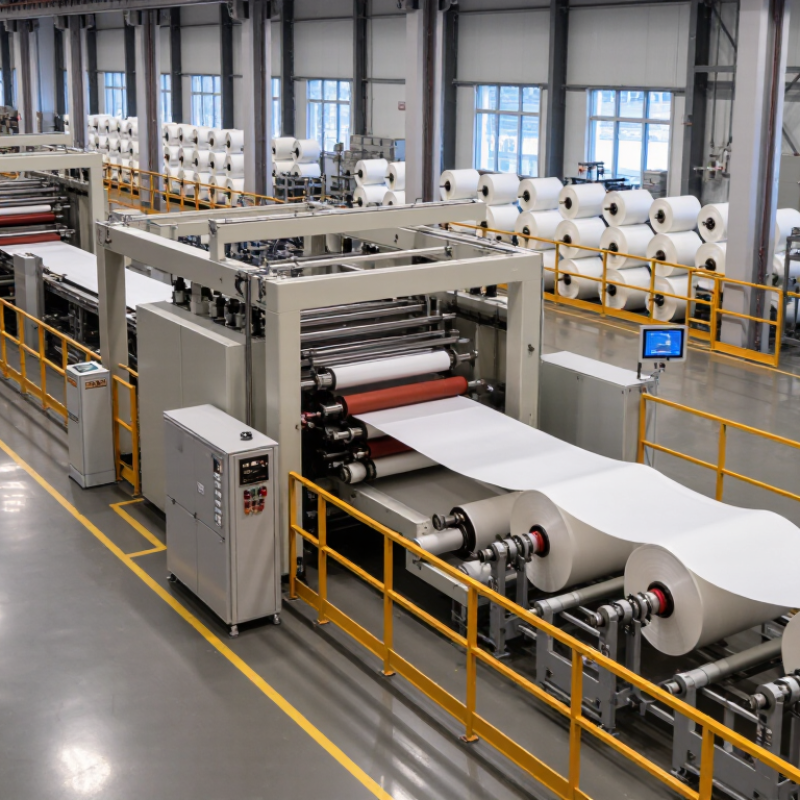
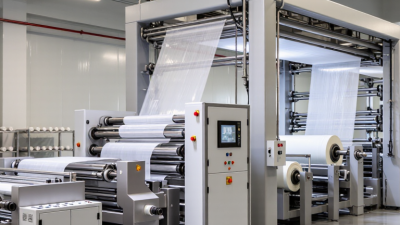
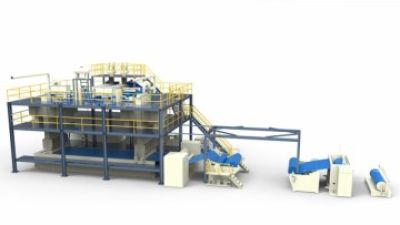
A spun bond nonwoven machine converts thermoplastic polymer pellets into continuous fabric. The process begins with feeding, melting, and filtering the polymer. A spinning beam then pushes the melt through many small holes. Filaments stretch through controlled airflow and fall onto a moving forming belt. Heat or pressure bonds the web into a stable sheet. No weaving is involved.
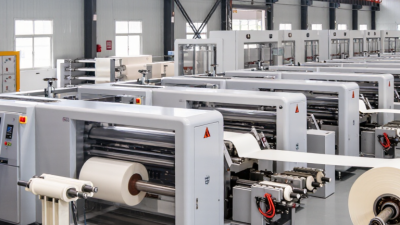
A China Spun Bond Nonwoven Machine may include extruders, spinning assemblies, a cooling system, web-forming equipment, calenders, and automatic winders. Operators monitor melt temperature, air pressure, line speed, and fabric weight. A small temperature drift can create uneven thickness. I have seen production teams check roll edges by hand, because sensors do not reveal every defect.
The market explains this equipment’s importance. Grand View Research valued the global nonwoven fabric market at approximately US$53.5 billion in 2022. Its report also forecasts strong growth through 2030, supported by hygiene, medical, filtration, and construction demand. Smithers’ industry analysis highlights rising expectations for lighter fabrics, higher output, and improved material efficiency. Those targets sound simple. They are not.
For global buyers, machine selection should match polymer type, fabric width, basis weight, annual capacity, energy use, and local service support. A quotation showing high speed may hide frequent cleaning or difficult spare-part replacement. Buyers should request test-run data, fabric samples, power consumption records, and maintenance intervals before approval. Specifications alone rarely tell the whole story.
How Spun Bond Nonwoven Machines Work
For global buyers, the best spun bond nonwoven machine is not simply the fastest line. It must produce stable fabric with controlled weight, strength, and width. Polymer pellets enter a heated extruder, where they melt and mix. A metering pump then pushes the melt through a spinneret. Hundreds of fine filaments emerge. High-speed air stretches them and cools them into continuous fibers. A moving collector forms the web, while a heated calender bonds it with pressure and patterned rolls. The finished material is trimmed and wound. Small temperature changes can create visible defects.
Industry demand supports careful investment. Grand View Research valued the global nonwoven fabrics market at about USD 54.8 billion in 2023 and projects a 7.0% compound annual growth rate from 2024 to 2030. Smithers, in The Future of Global Nonwovens to 2028, also identifies hygiene, medical, filtration, and construction as important growth areas. These figures do not guarantee profit. Energy use, raw-material consistency, operator skill, and local service can change the result. I have seen technically impressive lines underperform when maintenance planning was treated as an afterthought.
Tips: Ask for a documented trial using your target polymer and fabric weight. Check melt-pressure stability, air-drawing control, calender uniformity, and line-speed records. Request test data for tensile strength, elongation, and basis weight variation. A machine producing 160 meters per minute is less useful if its fabric varies across the roll. Remember this: stable output beats impressive speed.
How it works: A spunbond nonwoven machine melts polymer chips, extrudes continuous filaments through a spinneret, stretches and cools the filaments, lays them into a web, and bonds the web with heat and pressure. The chart shows indicative industry basis-weight ranges commonly selected for different end uses.
2026 Best Spun Bond Nonwoven Machine for Global Buyers
For global buyers, machine specifications matter more than impressive sales language. A reliable spun bond line should offer stable output between 10 and 35 gsm. That range supports shopping bags, hygiene layers, agricultural covers, and protective packaging. A working width from 1.6 to 4.2 meters improves production flexibility. Line speed should reach 450–600 meters per minute without damaging web uniformity. Speed alone is not enough.
Experienced operators should examine extruder capacity, melt pump accuracy, and die temperature control. A 1,600–2,400 mm die can suit many medium-scale factories. Automatic thickness adjustment helps reduce weak areas across the fabric roll. The calender should provide even pressure and controlled heating. Cooling airflow also affects strength, softness, and appearance. Small temperature changes can create visible defects.
Energy consumption deserves careful attention during factory planning. Buyers should request output per kilowatt-hour, not only installed motor power. Electrical compatibility, safety systems, spare parts, and remote troubleshooting need clear documentation. A practical control system should record temperature, pressure, speed, and production alarms. I would not trust a specification sheet without test records from similar materials. Perfect performance is unlikely. Operators still need training, maintenance discipline, and realistic production targets. A lower quoted price may hide difficult cleaning, slow changeovers, or expensive replacement parts.
| Machine Specification | Compact Line | Standard Commercial Line | High-Output Line | Why It Matters to Global Buyers |
|---|---|---|---|---|
| Typical Product Type | Single-beam PP spunbond | Single- or double-beam PP spunbond | Double-beam PP spunbond | Beam configuration affects production capacity, web uniformity, and the range of target applications. |
| Usable Web Width | 1.6–2.4 m | 2.4–3.2 m | 3.2–4.2 m | Wider machines are suitable for larger-volume products but require more floor space, power, and material-handling capacity. |
| Typical Basis-Weight Range | 10–150 g/m² | 10–180 g/m² | 10–200 g/m² | Basis weight determines fabric coverage, tensile strength, softness, filtration performance, and product cost. |
| Recommended Polymer | Polypropylene homopolymer pellets | Polypropylene homopolymer pellets | Polypropylene homopolymer pellets; optional compatible additives | Polymer grade and melt-flow behavior must match the extrusion system and the required fabric properties. |
| Typical Polymer Melt-Flow Range | Approximately 25–40 g/10 min | Approximately 25–40 g/10 min | Approximately 25–40 g/10 min | The correct melt-flow range supports stable spinning; the final value should be confirmed with the polymer supplier and machine integrator. |
| Mechanical Line Speed | Up to approximately 350–450 m/min | Up to approximately 400–500 m/min | Up to approximately 450–600 m/min | Actual production speed depends on basis weight, polymer grade, web width, cooling efficiency, and winding quality. |
| Typical Nominal Output | Approximately 150–300 kg/h | Approximately 250–500 kg/h | Approximately 400–800 kg/h | Output should be compared at the same web width, basis weight, uptime, and acceptable fabric-quality level. |
| Filament Diameter | Approximately 1.5–3.0 denier | Approximately 1.5–3.0 denier | Approximately 1.2–3.0 denier | Finer filaments can improve softness and surface coverage, while stable spinning is essential for uniform fabric performance. |
| Extruder Screw Diameter | Approximately 90–120 mm | Approximately 100–150 mm | Approximately 120–180 mm | Screw size influences polymer throughput and should be selected together with the die width and target output. |
| Calender Roller Working Temperature | Approximately 120–160 °C | Approximately 120–170 °C | Approximately 120–180 °C | Temperature must be adjusted according to polymer grade, basis weight, bonding pattern, and required tensile strength. |
| Calender Bonding Pattern | Embossed point bond or diamond bond | Embossed point bond, diamond bond, or application-specific pattern | Point bond, diamond bond, or customized engraved pattern | The bonding pattern affects softness, strength, elongation, air permeability, and product appearance. |
| Winder Roll Diameter | Up to approximately 1,200 mm | Up to approximately 1,500 mm | Up to approximately 1,800 mm | Larger rolls reduce roll-change frequency and can improve logistics efficiency for high-volume production. |
| Electrical Supply | Three-phase industrial power; commonly 380–415 V, 50 Hz | Three-phase industrial power; commonly 380–415 V, 50 Hz | Three-phase industrial power; commonly 380–415 V, 50 Hz | Voltage, frequency, short-circuit rating, and local electrical codes must be confirmed before shipment. |
| Installed Electrical Load | Approximately 250–500 kW | Approximately 400–800 kW | Approximately 600–1,200 kW | The final load depends on extrusion capacity, heating zones, air systems, drives, winding, and auxiliary equipment. |
| Compressed-Air Requirement | Approximately 0.6–0.8 MPa working pressure | Approximately 0.6–0.8 MPa working pressure | Approximately 0.6–0.8 MPa working pressure | Clean, dry, and stable compressed air is important for pneumatic valves, actuators, and automatic roll handling. |
| Typical Specific Energy Consumption | Approximately 0.8–1.3 kWh/kg | Approximately 0.7–1.2 kWh/kg | Approximately 0.7–1.1 kWh/kg | Energy consumption varies with output, operating speed, climate, heating settings, and the efficiency of auxiliary systems. |
| Control System | PLC with touchscreen HMI and inverter-controlled drives | PLC, touchscreen HMI, recipe management, and synchronized drives | PLC, HMI, recipe management, remote diagnostics, and advanced process monitoring | A familiar control platform and multilingual interface can reduce training time and simplify international service. |
| Automatic Functions | Basic tension control and manual roll change | Automatic tension control and assisted roll change | Automatic tension control, edge guiding, and automatic or semi-automatic roll change | Automation can improve consistency and reduce labor requirements, particularly during continuous production. |
| Approximate Main-Line Footprint | Approximately 35–55 m long; 8–12 m wide | Approximately 45–70 m long; 10–14 m wide | Approximately 55–85 m long; 12–16 m wide | Allow additional space for raw-material storage, utilities, maintenance access, finished rolls, and fire-safety routes. |
| Suitable Applications | Hygiene products, packaging, agricultural covers, and general industrial fabrics | Hygiene products, medical disposables, construction membranes, filtration support, and packaging | Large-volume hygiene, medical, construction, filtration, agricultural, and industrial applications | The best machine should be selected from the buyer’s target products, quality requirements, and planned production volume. |
| Recommended Buyer Verification | Sample production, output test, utility list, and spare-parts list | Factory acceptance test, fabric test report, installation plan, and operator training | Full performance test, long-duration trial, energy measurement, maintenance plan, and technical support agreement | Independent verification helps confirm that quoted performance matches real operating conditions rather than theoretical maximums. |
Choosing the 2026 best spun bond nonwoven machine requires more than reading its maximum output. Material compatibility matters first. Polypropylene is common, but recycled resin can vary in moisture, melt flow, and filtration behavior. A practical trial should test at the target GSM, not only with fresh virgin pellets.
Capacity must be measured as stable kilograms per hour. Ask for running data, startup waste, line speed, and acceptable GSM variation. EDANA’s 2024 market statistics placed European nonwoven production at roughly 3 million tonnes in 2023. This scale rewards dependable continuous operation. Bigger is not always better. A 2,000-kilogram-per-hour line may waste more during frequent product changes.
Energy performance deserves a hard number. The U.S. Department of Energy reports that motor-driven systems can consume about 70% of industrial electricity. Compare electricity in kWh per kilogram, including extruders, fans, pumps, heaters, and compressed air. Request readings at identical GSM and speed. Also inspect insulation, inverter control, heat recovery, and automatic shutdown functions. An experienced Spun Bond Nonwoven Machine Supplier should provide verified test records, not vague efficiency claims. I would still repeat the test after installation; factory demonstrations can look unusually clean. Check operator access, filter-change time, and alarm history. Small delays become expensive over a full production year.
A reliable spun bond nonwoven machine must control quality at every production stage. Grand View Research valued the global nonwoven fabric market at about USD 53.5 billion in 2023. It also projects a 7.1% compound annual growth rate from 2024 to 2030. This growth increases pressure on manufacturers to deliver stable rolls, not just higher output.
Look for closed-loop control of basis weight, polymer temperature, and spinning speed. A precision melt pump helps maintain consistent filament flow. Inline web inspection can reveal streaks, holes, and uneven bonding before rewinding. Servo-driven winding also reduces wrinkles near the roll edges. In my production experience, stable air pressure matters as much as speed. Small pressure changes can create visible softness differences. No machine is perfect. Operators still need practical training and clear maintenance records. A credible Spun Bond Nonwoven Machine Manufacturer should provide test data, calibration procedures, and measurable service response times.
Tips: Request trial production with your target polymer and fabric weight. Check basis-weight variation across the full roll width. Review energy use per kilogram, filter-change intervals, alarm history, and spare-part availability. ASTM and ISO test methods can verify tensile strength, elongation, air permeability, and dimensional stability. These checks expose weak points early. Some buyers focus too heavily on hourly output. That can be a costly mistake. Reliability is measured over months, not during one impressive demonstration.
Selecting the best machine requires more than comparing prices.
Grand View Research valued the global nonwoven fabric market at about USD 53.5 billion in 2022, with strong growth expected through 2030. This expansion attracts capable suppliers and weak imitators. A reliable Spun Bond Nonwoven Machine Factory should provide production records, material trials, and measurable output data. Ask for a factory acceptance test using your polypropylene grade, target GSM, working width, and intended speed. Check basis-weight variation, energy use per kilogram, and waste levels.
Compliance needs evidence, not promises.
Request a documented risk assessment, electrical diagrams, emergency-stop tests, and applicable conformity documents for the destination market. ISO 9001 certification supports quality control, but it does not replace machinery safety compliance. Also review environmental requirements, noise readings, and electrical efficiency. Paperwork can look complete while a trial still fails. That possibility deserves attention.
After-sales support often separates a useful supplier from an expensive problem.
Require a spare-parts list with part numbers, stock locations, response times, and remote diagnostic procedures. Confirm commissioning support, operator training, software backups, and warranty exclusions in writing. A practical test includes running the line for several hours, checking temperature stability, web tension, and shutdown recovery. The perfect supplier does not exist. A transparent one admits limitations and corrects them quickly.
The market outlook for PP spunbond nonwoven fabric remains promising as manufacturers seek efficient, flexible, and cost-conscious solutions for high-volume material production. A double spinning beam configuration can enhance line productivity by supporting stable, continuous output while allowing operators to manage different fabric specifications more efficiently. This design is suitable for businesses responding to growing demand in hygiene products, medical supplies, agriculture, construction, packaging, and other industrial applications.
The HG spunbond nonwoven fabric making machine is designed to produce durable PP nonwoven fabric with consistent web formation and reliable operating performance. Its production process supports the manufacture of lightweight or heavier fabrics in various widths, weights, and functional characteristics, helping converters adapt materials to specific end-use requirements. PP spunbond fabric is also valued for its cost efficiency, strength, breathability, and convenient processing.
With an emphasis on production stability and resource-conscious manufacturing, the double spinning beam line can help reduce operational pressure while improving output flexibility. The resulting PP nonwoven fabric rollers are easy to store, transport, and further convert into products such as protective covers, agricultural fabrics, medical disposables, shopping bags, building membranes, and hygiene components. As demand develops across both essential and technical textile sectors, equipment capable of combining productivity with dependable fabric quality is gaining increased attention.
Closed-loop controls regulate basis weight, polymer temperature, and spinning speed. A precision melt pump supports even filament flow. Small air-pressure changes can still alter fabric softness.
It detects streaks, holes, and uneven bonding before rewinding. Early detection reduces defective roll output. It cannot replace careful operators.
Servo-driven winding helps control web tension and edge alignment. It can reduce wrinkles near roll edges. Check the full roll width.
Use the intended polymer, fabric weight, working width, and target speed. Measure basis-weight variation across the roll. Also record waste and energy use.
Request test results, calibration procedures, alarm history, and filter-change intervals. Ask for measurable service response times. Promises are not enough.
Review risk assessments, electrical diagrams, emergency-stop tests, and destination-market documents. Check noise levels and electrical efficiency. Complete paperwork may still hide practical weaknesses.
Confirm spare-part numbers, stock locations, response times, and remote diagnostic methods. Review commissioning, operator training, software backups, and warranty exclusions. Details matter later.
Run the line for several hours and monitor temperature stability, web tension, and shutdown recovery. Hourly output alone can mislead buyers. Reliability takes months to prove.
Choosing the best spun bond nonwoven machine in 2026 requires more than comparing purchase prices. This article explains what the machine is, how polymer chips are melted, spun into continuous filaments, web-formed, and bonded into uniform nonwoven fabric. It also outlines the key specifications global buyers should review, including working width, output capacity, material compatibility, automation level, power consumption, line stability, and space requirements. Understanding these factors helps manufacturers match equipment with products such as hygiene materials, medical fabrics, packaging components, and industrial textiles.
The guide also examines how to compare material utilization, production efficiency, energy performance, and finished-fabric quality. Special attention is given to features that support reliable operation, including precise temperature control, consistent web formation, intelligent monitoring, easy maintenance, and effective quality inspection. Finally, buyers are encouraged to evaluate supplier experience, technical documentation, safety and environmental compliance, installation training, spare-parts availability, warranty terms, and long-term after-sales support before making a responsible investment.