As the global demand for Nonwoven Fabrics keeps growing, manufacturers are on the lookout for smarter, more efficient solutions. According to a report from Smithers Pira, the nonwoven fabric market is projected to hit around $54 billion by 2026—pretty impressive, right? This rush of growth is really pushing folks to innovate and seek out the latestNonwoven Fabric Manufacturing Machines. Industry expert Dr. Emily Chen points out, "Having the right equipment can really boost both productivity and quality."
Investing in a top-notch manufacturing machine is pretty much essential if you want to stay ahead of the game. But let’s be honest—manufacturers are dealing with some tricky challenges like skyrocketing production costs and ever-changing customer needs. It’s not always easy to find that sweet spot where you get efficiency without sacrificing quality. The right tech can definitely help bridge that gap, but picking the right machine? That needs some careful thought.
There are a bunch of things to consider when choosing the perfect machine—things like how fast it runs, how versatile it is, and whether it can easily integrate automation features. As the industry keeps evolving, so should the machinery. It’s important for buyers to think about where they see their operation long-term and how adaptable their technology really is. With a bit of guidance and some solid insights, navigating this competitive landscape becomes a lot more manageable—and even kinda exciting.
Nonwoven fabric has become a crucial component in various industries. Defined as a textile material made from fibers bonded together, it offers versatility and strength. According to a market report by Smithers Pira, the nonwoven fabric market is projected to reach $52 billion by 2027. This significant growth highlights its increasing applications in medical, automotive, and hygiene products.
In the medical field, nonwoven fabrics are essential. They are used in surgical gowns, masks, and other protective gear. Their breathability and fluid resistance enhance safety for both patients and healthcare workers. The automotive sector uses Nonwoven Materials for insulation and soundproofing, emphasizing their durability and effective performance.
Tips for buyers: consider the fabric's lifecycle and sustainability. Nonwoven materials can be made from recycled content, offering eco-friendly options. Evaluate the specific requirements of your application, as not all nonwoven fabrics provide the same level of strength or resistance. This reflection can help ensure you choose the right machine for production.
The nonwoven fabric manufacturing industry is poised for significant growth in 2026. Market trends indicate an increasing demand for sustainable materials. Innovations in production processes are leading to a more eco-friendly approach. Companies are looking into biodegradable options and recycling technologies. This shift reflects a wider societal trend toward environmental responsibility.
Several factors are shaping the future landscape. Emerging economies are investing heavily in nonwoven fabric applications. In particular, China Nonwoven Fabric Manufacturing Machine technology is evolving rapidly. This technological advancement enhances production efficiency and reduces waste. However, challenges remain in diversifying product lines and meeting quality standards.
Buyers need to consider various aspects before making a decision. Assessing the total cost of ownership is crucial. The need for skilled operators also raises concerns. While machines have advanced significantly, operator training is still essential. The industry is at a transformative stage, presenting both opportunities and obstacles.
| Machine Type | Production Capacity (kg/h) | Technology Type | Applications | Market Trend (2026) |
|---|---|---|---|---|
| Spunbond Machine | 800 | Thermal | Medical, Hygiene | Increasing Demand |
| Meltblown Machine | 600 | Electrostatic | Filters, Masks | Stabilizing Growth |
| Carded Machine | 700 | Mechanical | Geotextiles, Insulation | Growing Market |
| Hydroentangled Machine | 500 | Fluid-based | Wipes, Personal Care | Innovative Solutions |
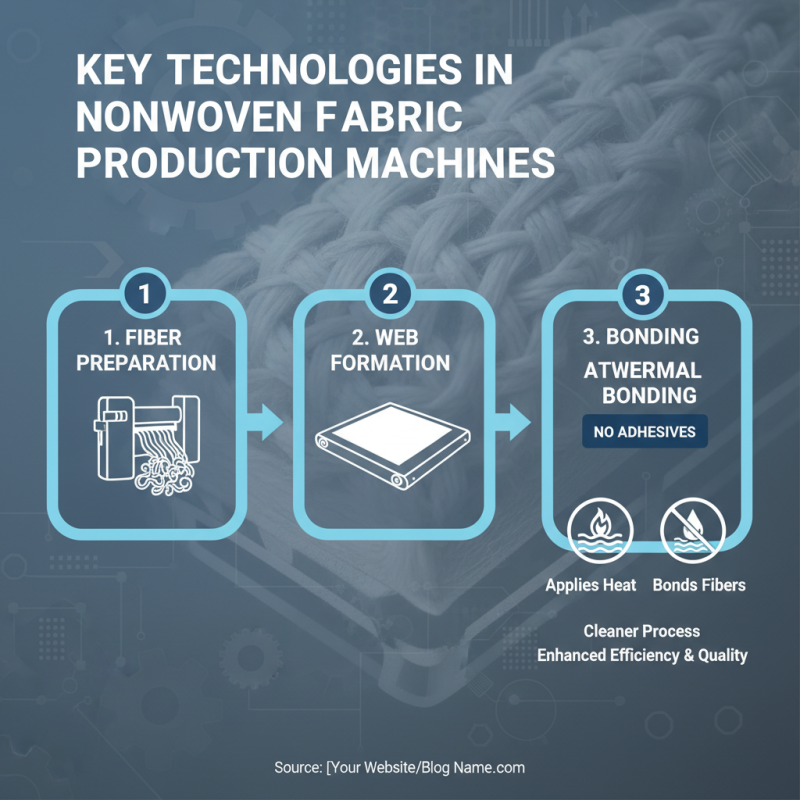
The world of nonwoven fabric production is constantly evolving. Key technologies play a significant role in enhancing efficiency and quality. For instance, the use of advanced thermal bonding techniques has become prevalent. This method involves applying heat to bond fibers without the need for adhesives, offering a cleaner and more efficient process.
Recent industry reports indicate that the global nonwoven fabric market is projected to reach $51 billion by 2026, with a notable CAGR of 6.2%. This growth is driven by increasing demand across various sectors, such as hygiene products and automotive applications. Furthermore, needle-punching technology remains critical, particularly in creating durable and high-performance nonwovens. It mechanically entangles fibers, resulting in robust fabrics suited for numerous applications.
However, not all technologies guarantee perfection. Many manufacturers still grapple with optimizing production processes, leading to inconsistent quality. Issues like fiber entanglement and irregular thickness can compromise the final product. Continuous innovation and a commitment to research are crucial for addressing these challenges and meeting market demands. The commitment to quality and reliability remains vital in this fast-paced industry.
In the nonwoven fabric industry, machinery plays a crucial role. Selecting the right Nonwoven Fabric Manufacturing Machine is essential for efficiency and quality. Different types of machines offer various benefits. For example, spunbond and meltblown technologies are widely used, with spunbond making up nearly 50% of the market share, according to a 2022 report by Market Research Future.
Spunbond machines utilize a continuous process, resulting in high production rates and cost-effectiveness. The technology creates strong and durable fabrics, ideal for many applications. Conversely, meltblown machines excel at producing fine fibers for filtration products. They are often coupled with spunbond lines to create composite fabrics, which have gained popularity in recent years. Various industry experts highlight the growing demand for these composite materials, driven by hygiene products and medical applications.
However, selecting the right machine requires careful consideration. Not all suppliers provide the same level of quality or support. According to the Nonwovens Industry Association, about 30% of manufacturers reported issues with machine reliability in 2021. As a buyer, it’s crucial to investigate supplier reputation and machine performance. The right Nonwoven Fabric Manufacturing Machine Supplier can significantly impact production output and fabric quality.
This chart compares the production capacity of various types of nonwoven fabric manufacturing machines based on their categories. The data reflects the average production output (in tons per day) of each machine type.
Sustainability is crucial in nonwoven fabric production. The industry is facing pressures to reduce waste and energy use. According to a report by Smithers Pira, the global nonwoven market is projected to reach 11.5 million tons by 2026. However, this growth must align with sustainable practices.
Innovative technologies are emerging to address these challenges. For example, many manufacturers are now utilizing biodegradable raw materials. This shift can reduce environmental impact significantly. Recent studies show that nonwoven fabrics developed from sustainable sources can lower carbon footprints by up to 30%. This showcases how material choice directly affects sustainability.
Yet, challenges remain. Not all new materials perform equally well. Some biodegradable options may not meet the durability needs of certain applications. Research continues to identify the best solutions for both performance and environmental responsibility. An honest assessment of current practices reveals room for improvement, pushing the industry to adapt further.
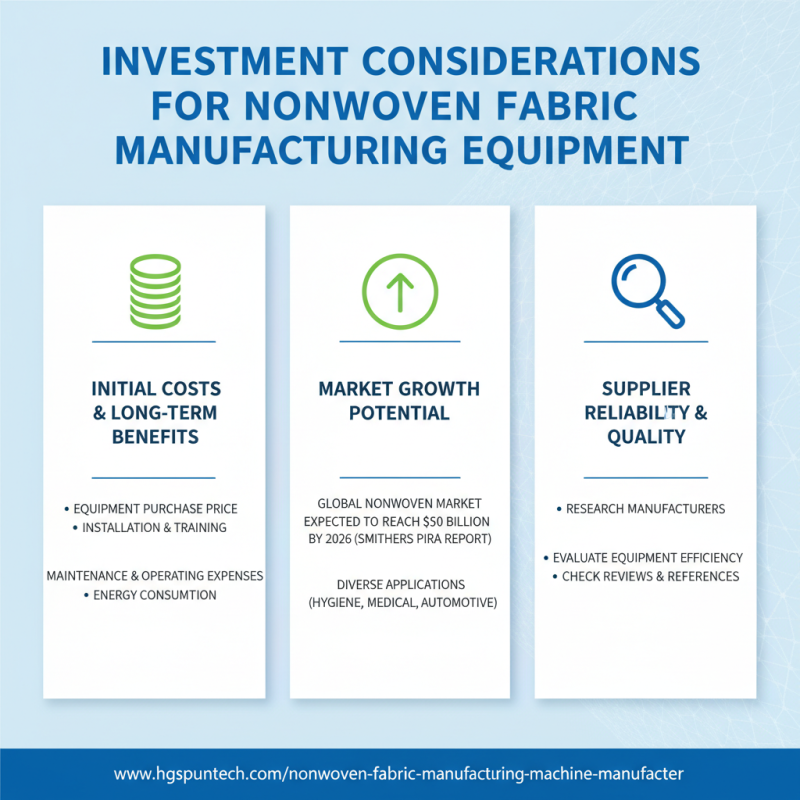
When considering investments in nonwoven fabric manufacturing equipment, it's crucial to evaluate both the initial costs and the long-term benefits. According to a recent report by Smithers Pira, the global nonwoven market is expected to reach $50 billion by 2026, highlighting the significant potential for growth. However, not all Nonwoven Fabric Manufacturing Machine Manufacturers provide the same level of quality or efficiency. Buyers must conduct thorough research to identify the most reliable suppliers.
It’s important to examine the performance metrics of machinery, such as production speed and energy consumption. Some machines may promise high output but can lead to increased operational costs over time. A builder's focus on sustainable, energy-efficient technology could enhance return on investment. Also, consider maintenance costs that can arise with complex machinery. Regular servicing schedules and availability of spare parts can influence your choice.
Additionally, the choice of fabric type influences equipment needs. Different applications, from hygiene products to geotextiles, require distinct technologies. Such variations make it vital for businesses to align their manufacturing capabilities with specific market demands. Failure to adapt can result in reduced competitiveness. Properly evaluating what each Nonwoven Fabric Manufacturing Machine Manufacturer offers is essential for making informed decisions.
When exploring top manufacturers of nonwoven fabric machines, it’s important to look at industry leaders. These companies are at the forefront of technology and design. Their machines vary in functionality, creating various types of nonwoven fabrics. The right machine can significantly boost production efficiency.
Many manufacturers boast impressive innovations. They prioritize user-friendly interfaces and energy-efficient processes. Some machines are designed for specific applications, enhancing versatility. However, not all machines deliver on their promises. Buyers need to assess the reliability of these machines critically. A quality Nonwoven Fabric Manufacturing Machine Factory will provide detailed specs and support.
Investing in nonwoven fabric machinery requires careful consideration. Manufacturers should be evaluated based on track records and technological advancements. It's essential to review past buyer experiences. Machines should meet the demands of current market trends while remaining adaptable for the future. Choosing a machine isn't just about price; it's about long-term value.
: Nonwoven fabric consists of fibers bonded together, providing versatility and strength for various applications.
It is critical for surgical gowns, masks, and protective gear, ensuring safety through breathability and fluid resistance.
Nonwoven materials are used for insulation and soundproofing, showcasing their durability and effective performance.
The industry faces pressure to reduce waste and energy, aligning with wider environmental responsibility trends.
Innovations for biodegradable materials and eco-friendly production processes are shaping the industry's future.
Assess fabric lifecycle, specific application needs, and sustainability options to ensure proper performance.
Yes, issues include diverse product lines, quality standards, and the need for skilled operators in production.
Using sustainable sources can lower carbon footprints by up to 30%, influencing overall environmental impact positively.
Not all biodegradable options meet the required durability for certain applications, posing performance challenges.
Yes, despite advancements in technology, proper training for operators remains essential in production efficiency.
The article titled "2026 Best Nonwoven Fabric Manufacturing Machine Guide for Buyers" provides a comprehensive overview of nonwoven fabric, highlighting its definition and various applications in diverse industries. It discusses the current market trends for nonwoven fabric manufacturing, projecting growth and technological advancements by 2026. Key technologies utilized in the production of nonwoven fabric manufacturing machines are examined, along with a comparison of different machinery types available on the market.
Additionally, the article emphasizes sustainability in nonwoven fabric production, presenting innovative approaches that manufacturers can adopt to create environmentally friendly products. It also outlines investment considerations that potential buyers should keep in mind when purchasing manufacturing equipment. Finally, a review of leading manufacturers of nonwoven fabric machines is provided, offering insights into their offerings and contributions to the industry.